What to Expect During an IUI Cycle?
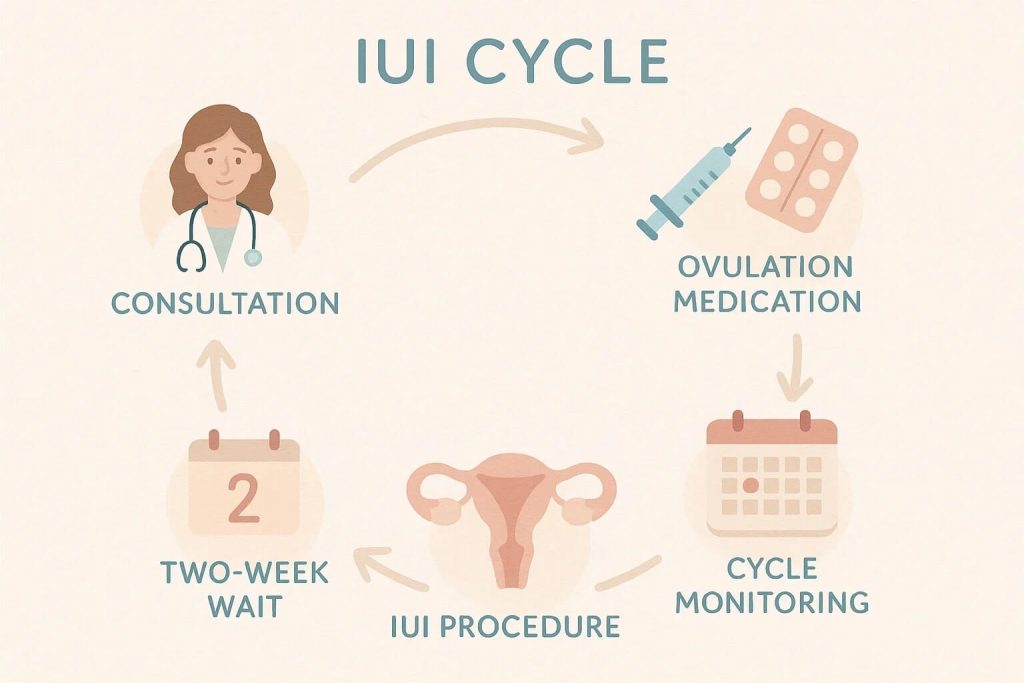
Undergoing intrauterine insemination (IUI) can stir a mix of hope and uncertainty. You may be wondering what steps are involved, whether it hurts, or if life can continue as normal afterward. This guide is designed to walk you through the entire IUI process, from consultation to the two-week wait, and help you feel more confident and prepared.
In this article, you’ll gain a clear overview of each phase in an IUI cycle and why each one matters. We’ll explain in simple terms what IUI is, who it’s for, and how medications help time ovulation perfectly. You’ll also get practical information on sperm preparation and the procedure itself, along with what to expect in the days following insemination. Whether this is your first cycle or you’re returning after a previous attempt, these insights will help you understand the process and make informed decisions about your care.
Here’s a quick stat: Pregnancy rates range from about 9–20% per cycle, depending on factors like age and diagnosis, with cumulative rates after several attempts reaching 30–40% in many cases. We’ll unpack what that means for your family-building path.
What Is IUI and Who Is It For?
IUI is a fertility procedure where specially washed sperm is directly placed into the uterus, timed to coincide with ovulation. This gives the egg and sperm a better chance to meet without the sperm having to travel through the cervix. Many people find comfort in how short and straightforward the procedure is, as it typically takes just a few minutes and is done in the clinic with minimal discomfort.
Who Might Benefit from IUI
- Mild male-factor infertility: Partners with slightly low sperm count or movement may find IUI boosts their chances.
- Unexplained infertility: When standard tests show no obvious issues, IUI offers a gentle first step.
- Couples with timing or intercourse difficulties: Helps when ovulation isn’t easy to track or intimacy is hindered by physical or emotional stress.
*Note that these categories are currently not permitted to undergo IUI in Thailand
According to research, pregnancy rates per cycle range from about 7.5% up to 10% in women under 40, and rates drop further with age, to around 9.8% for those between 40–42 years old. Younger patients under 35 may see rates closer to 13–14% per IUI cycle. These numbers highlight why IUI is often chosen as a first infertility treatment, as it’s less invasive and easier to repeat, while still offering solid chances depending on your circumstances.
Preparing for Your IUI Cycle
Initial Consultation and Fertility Testing
- You and your partner will begin with a complete fertility review, which includes menstrual cycle history, any past pregnancies, and previous tests.
- You’ll undergo standard screening such as hormone blood tests (like FSH and LH on day 3), ultrasound to check ovarian reserves, and a semen analysis to assess sperm count and health.
- These assessments help determine whether you proceed with a natural cycle or one that’s medicated to increase egg release.
Medications You Might Tak
Depending on your fertility profile, our care team might recommend one of the following to stimulate ovulation:
- Clomiphene citrate (Clomid): Triggers ovulation in around 60–85% of cycles, with pregnancy rates around 10–20% per IUI cycle.
- Letrozole (Femara): Often used for women with PCOS and may offer slightly higher pregnancy rates (~18% vs 13% per IUI) than Clomid.
- Injectable gonadotropins: These hormones spur multiple follicles, leading to pregnancy rates of 15%+ per cycle, but require closer monitoring and have a higher cost .
Your health, medical history, and comfort with monitoring schedule all play a role in choosing the right approach for your IUI cycle.
Cycle Monitoring and Timing
Tracking Ovulation
- You’ll visit the clinic for 2–4 appointments during your cycle
- At each visit, you’ll get a transvaginal ultrasound (a quick, gentle internal scan) to see how your egg follicles are growing, with no special prep needed
- Blood tests at selected visits check your hormone levels (like estrogen) to help pinpoint when you’re about to ovulate.
Once a dominant follicle reaches about 18–20 mm and your estrogen is higher, you’ll get an hCG “trigger shot”. This final push helps release the egg. Your IUI is then scheduled about 36 hours later, timed to match ovulation for the best chance of fertilization .
Sperm Collection and Preparation
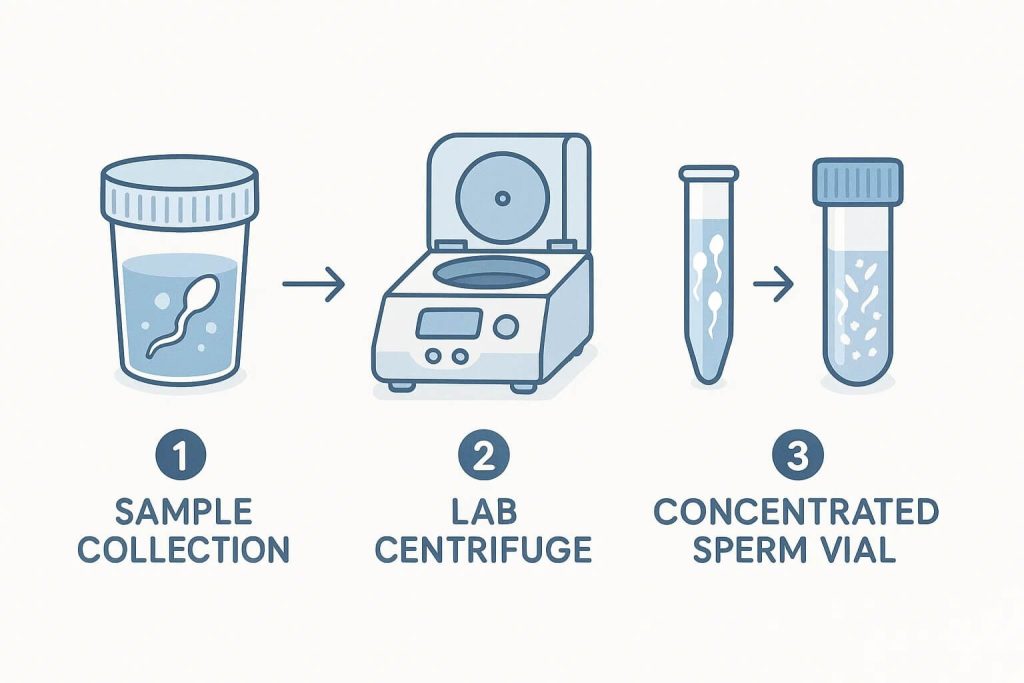
- On cycle day, your partner provides a fresh sperm sample at the clinic, or you use a thawed donor sample.
- In the lab, the sample undergoes a wash and prep process (also called “swim-up”) to isolate the healthiest, most active sperm.
- This takes around 20–40 minutes, resulting in a clean, concentrated fluid ideal for insemination.
The IUI Procedure Itself
- Quick and simple – You’ll lie on an exam table (similar to a Pap test) while your doctor uses a thin, soft catheter to place the prepared sperm into your uterus.
- Timing – The whole process takes just a few minutes. Anesthesia isn’t needed, and most people move comfortably before the end.
- Sensation – You might feel mild cramping or pressure as the catheter goes through the cervix, which quickly fades once it’s removed.
Most patients stay in the room for about 10–20 minutes afterward to ensure they’re feeling okay.
When It’s Time to Think About What’s Next
- Age is a major factor: Women under 30 may be successful after a few cycles, while those over 40 may see much lower success.
- Diagnosis matters too: IUI works best for mild male-factor infertility, unexplained infertility, or donor sperm cycles.
- If cycles aren’t successful after 3–4 attempts: or if multiple follicles don’t develop during stimulation, your care team may recommend moving to IVF .
What You Can Do
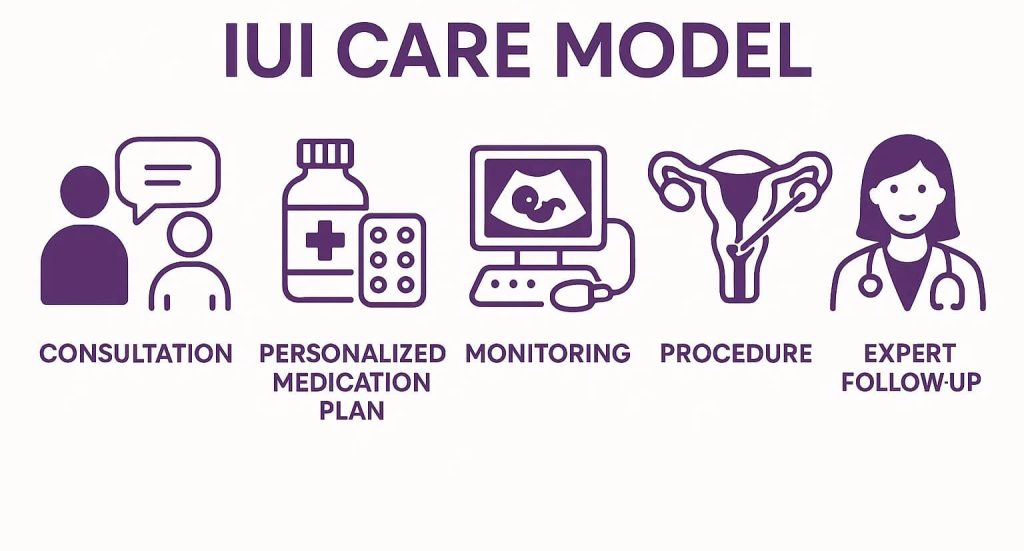
- Track your cumulative progress, as many patients succeed after a few cycles.
- Ask your fertility team if it’s time to reassess, based on age, diagnosis, or follicle response.
- Know your next option, as IVF often follows IUI, but don’t hesitate to ask questions earlier if needed.
If you’re not sure whether to continue IUI or move to IVF, have a conversation with our care team and specialists at Millennium IVF, so we can help chart your best path forward.
Written by
Dr. Naruemit Wonglikitpanya, M.D.
Fertility specialist at Millennium IVF Clinic in Bangkok with over 15 years of experience, known for evidence-based IVF care and personalized treatment plans.
Share this article
Talk to our care team.
Free consultations with our specialists: clear, personalized advice for your IVF journey.
Book Consultation