What Happens During Fertility Blood Testing? Understanding Common Hormone Tests
Key points
- Fertility blood tests measure hormones linked to ovarian reserve, ovulation and cycle timing.
- AMH helps estimate ovarian reserve, meaning the likely number of eggs remaining.
- FSH and LH are usually checked early in the cycle; progesterone is checked after ovulation to confirm it happened.
- Timing matters, because several of these hormones vary through the menstrual cycle.
- A normal or abnormal hormone result does not explain fertility on its own.
Fertility blood tests can feel confusing, especially when results include hormone names such as AMH, FSH, LH, and progesterone without much explanation. These tests can provide useful clues about ovarian reserve, ovulation, menstrual cycle timing, and how the body may respond to fertility treatment.
However, blood testing is only one part of a fertility assessment. Results are usually reviewed alongside age, medical history, menstrual cycle pattern, ultrasound findings, and sperm testing where relevant. This guide keeps fertility hormone blood tests explained in simple terms, so you can better understand what your doctor may be looking for during a fertility checkup.
What Are Fertility Hormone Blood Tests?
Fertility hormone blood tests measure hormones, which are chemical messengers in the blood. These hormones can help guide egg development, ovulation, menstrual cycle timing, and preparation of the uterus.
Your doctor may recommend fertility blood tests before IVF, IUI, egg freezing, or if your periods are irregular. Some tests can be done more flexibly, while others need to be taken on specific days of your menstrual cycle so the results can be interpreted correctly.
Blood testing is usually one part of a wider fertility assessment, not a complete answer on its own. For general patient information, you can also read this fertility testing guidance from The Royal Women’s Hospital.
Why Do Doctors Use Blood Tests During Fertility Assessment?
Doctors use fertility blood tests to better understand how the body is responding during the menstrual cycle. These tests can help assess ovarian reserve, check whether ovulation is likely happening, and identify hormone patterns that may be linked with irregular periods, PCOS, thyroid concerns, or other health factors.
Blood test results can also help guide treatment planning. For example, your doctor may use hormone results to help decide the timing of treatment, whether extra monitoring is needed, or how the ovaries may respond to medication during IVF treatment.
However, blood tests do not give a complete fertility diagnosis on their own. They are most useful when reviewed together with your age, medical history, menstrual cycle pattern, ultrasound findings, and sperm testing where relevant.
Common Fertility Hormone Blood Tests and What They Can Show
Fertility hormone blood tests can help your doctor understand different parts of your cycle and fertility health. Each hormone gives a different type of clue, so results are usually reviewed together rather than as separate answers.
AMH
AMH stands for Anti-Müllerian Hormone. It is linked to ovarian reserve, which means an estimate of the remaining egg supply.
AMH can help doctors understand how the ovaries may respond to stimulation medication during fertility treatment. This can be useful when planning IVF or egg freezing.
However, AMH does not measure egg quality. It also does not guarantee whether someone will or will not become pregnant. Age also plays a role as egg quality generally changes over time.
Patients with low AMH may need a more personalized fertility assessment, but the result should always be interpreted with other information.
FSH
FSH stands for Follicle-Stimulating Hormone. Follicles are small sacs in the ovaries that may contain eggs.
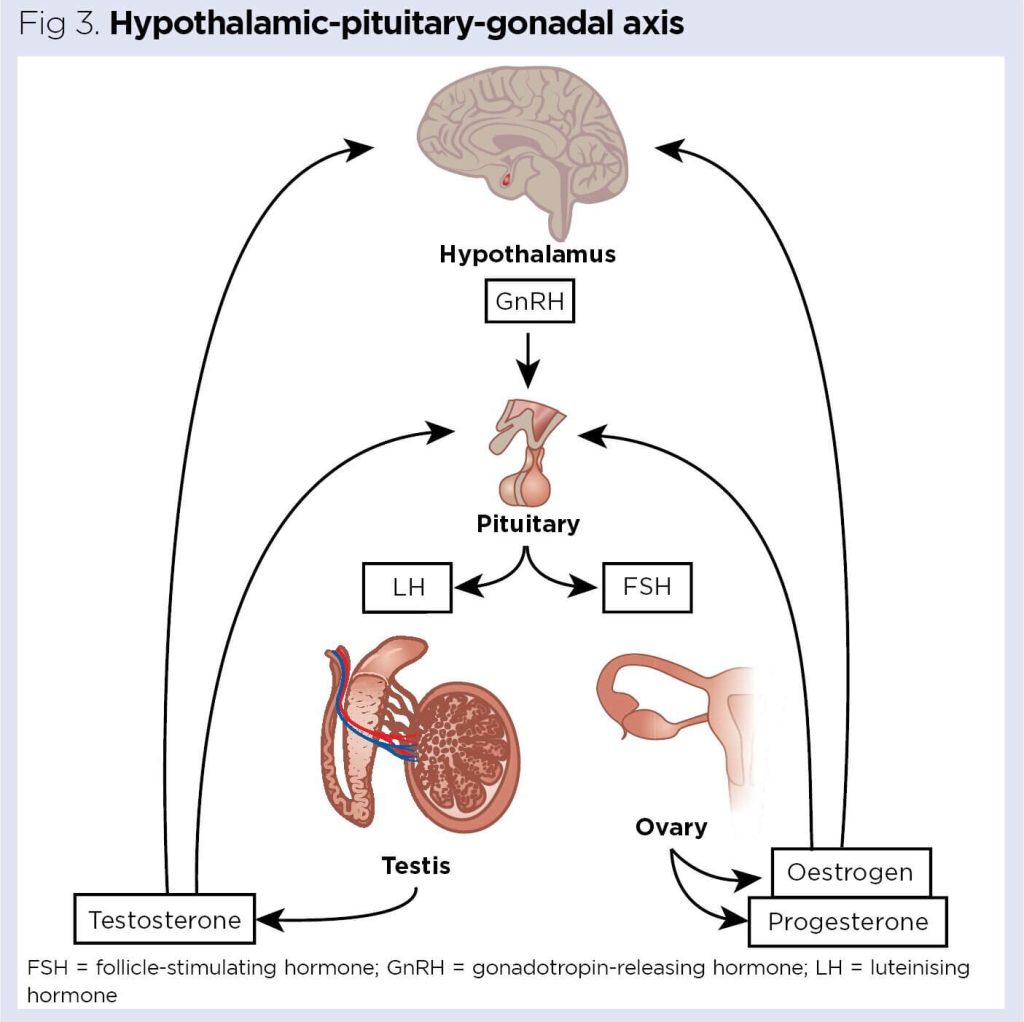
Hormone pathway showing how the brain, pituitary gland, ovaries, testes, and follicles communicate.
LH
LH stands for Luteinizing Hormone. It usually rises before ovulation, which is when an egg is released from the ovary.
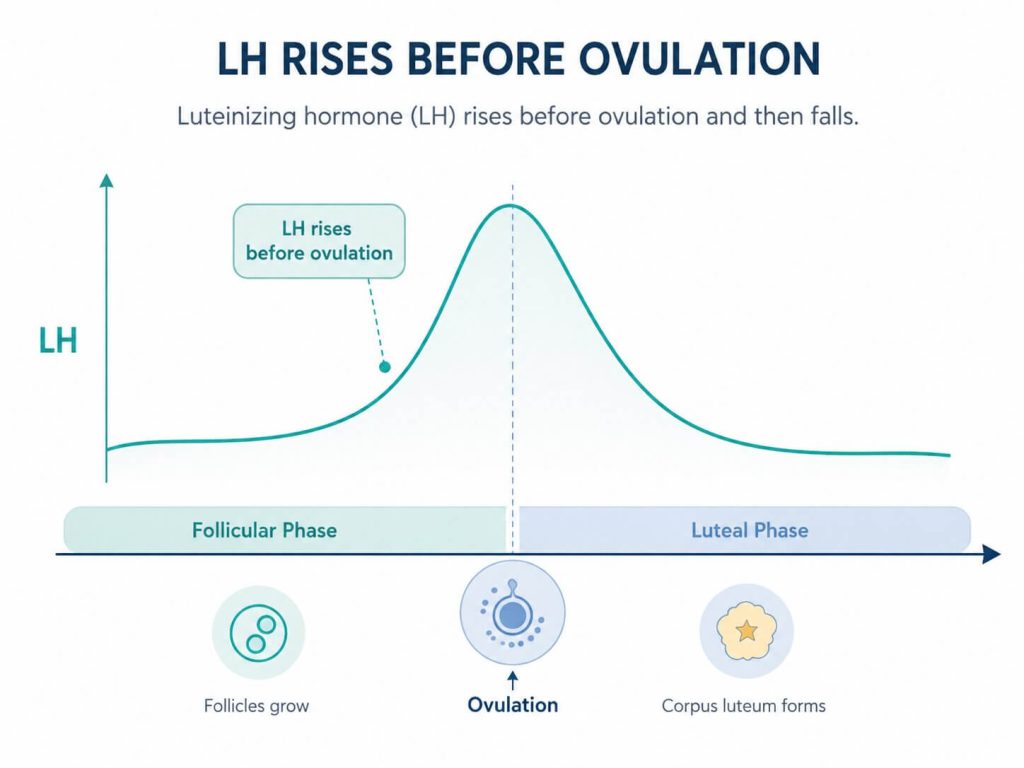
Doctors may check LH to understand ovulation patterns or help time fertility treatment. LH is often interpreted alongside FSH and ultrasound findings, especially when cycles are irregular.
For treatments where timing is important, such as an IUI cycle, tracking ovulation can help doctors plan the right window for treatment.
Progesterone
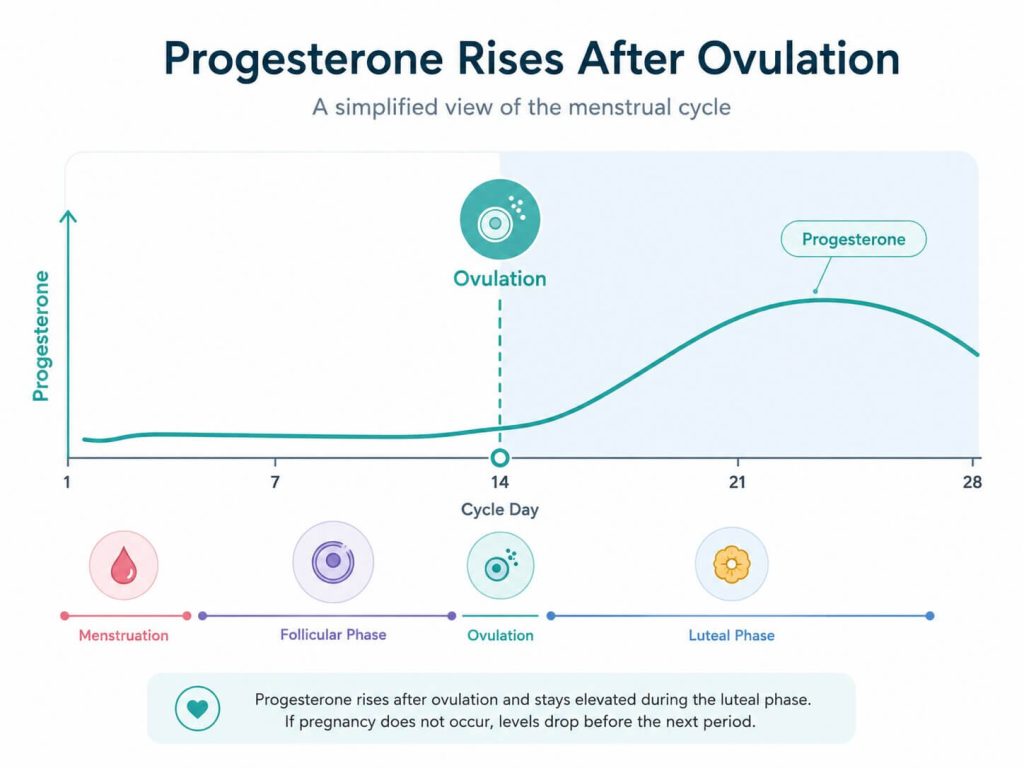
Progesterone usually rises after ovulation. A progesterone blood test may help show whether ovulation likely happened.
Other Hormones Your Doctor May Check
Your doctor may also recommend other hormone tests depending on your cycle pattern, symptoms, and treatment plan.
Estradiol can help assess follicle activity and response to treatment.
Prolactin may be checked if periods are irregular or absent.
TSH checks thyroid function, which can affect menstrual regularity.
Androgens may be checked when PCOS or ovulation problems are suspected.
A Clearer Starting Point for Fertility Planning
Hormone test results can feel confusing at first, especially when several numbers and hormone names appear on the same report. The goal is not to self-diagnose, but to understand what the results may suggest about ovarian reserve, ovulation, cycle timing, or treatment planning.
A fertility specialist can help connect these results with the wider picture, including age, symptoms, ultrasound findings, medical history, and partner testing where relevant. From there, the next step may involve monitoring, lifestyle guidance, IUI, IVF, ICSI, egg freezing, or further testing, depending on the individual situation.
Fertility Hormone Blood Tests Explained
- Fertility blood tests measure hormones linked to ovarian reserve, ovulation, cycle timing, and fertility treatment planning.
- AMH can help estimate ovarian reserve, but it does not measure egg quality or predict pregnancy on its own.
- FSH and LH are often checked early in the menstrual cycle to assess ovarian and ovulation signals.
- Progesterone is usually checked after ovulation to help confirm whether ovulation likely happened.
- Blood test results are most useful when reviewed with ultrasound findings, medical history, and sometimes semen analysis.
- Results should be discussed with a fertility specialist before making decisions about IUI, IVF, ICSI, egg freezing, or other treatment options.
Frequently asked questions
Does one abnormal hormone result mean I am infertile?
No. Hormone results are interpreted alongside your age, cycle pattern, ultrasound findings and, where relevant, a semen analysis. A single result does not explain fertility on its own.
Why do some tests have to be done on particular days?
Because several hormones vary through the cycle. FSH and LH are usually measured early in the cycle and progesterone after ovulation, so the timing is what makes the result meaningful.
Does AMH tell me whether I can get pregnant?
No. AMH reflects how many eggs remain and predicts response to stimulation. It is not a test of whether you can conceive. See our article on low AMH.
Should my partner be tested too?
Yes. Male factors are involved in a substantial proportion of cases and rarely cause symptoms, so a semen analysis belongs in any assessment.
Written by
Dr. Naruemit Wonglikitpanya, M.D.
Fertility specialist at Millennium IVF Clinic in Bangkok with over 15 years of experience, known for evidence-based IVF care and personalized treatment plans.
Share this article
Talk to our care team.
Free consultations with our specialists: clear, personalized advice for your IVF journey.
Book Consultation