What Are Blastocysts and Why Are They Important in IVF?
If you’re going through IVF, you’ve probably heard your doctor reference the phrase blastocyst. It’s a term that commonly emerges around day five of embryo development, and for many patients, it might provoke concerns about what makes this stage special.
The blastocyst phase is a key milestone in the IVF process. By this phase, the embryo has split into hundreds of cells and began developing structures that would eventually become the infant and placenta. Reaching this stage helps embryologists assess which embryos are most likely to implant successfully.
In this post, we’ll discuss what blastocysts are, why some embryos are cultivated until day five before transfer, and how this strategy might boost the odds of a healthy pregnancy. You’ll also discover how clinics like ours employ modern methods like IVF and ICSI to encourage healthy blastocyst growth and increase treatment results.
What Is a Blastocyst?
A blastocyst is an embryo that has developed for around five or six days following fertilization. At this stage, the embryo has split numerous times and currently has a few hundred cells. These cells have begun to develop into specific sections. The inner cell mass is the collection of cells that will ultimately become the baby, while the outer layer, termed the trophectoderm, will create the placenta that feeds the baby throughout pregnancy. Inside the embryo, a tiny fluid pocket known as the blastocoel helps the embryo grow and prepare ready to connect to the uterus.
In a natural pregnancy, the embryo reaches this stage soon before it goes into the uterus to implant. In IVF, growing embryos to the blastocyst stage in the lab enables doctors to assess which ones are developing healthily and have the highest chance to continue growing after transfer.
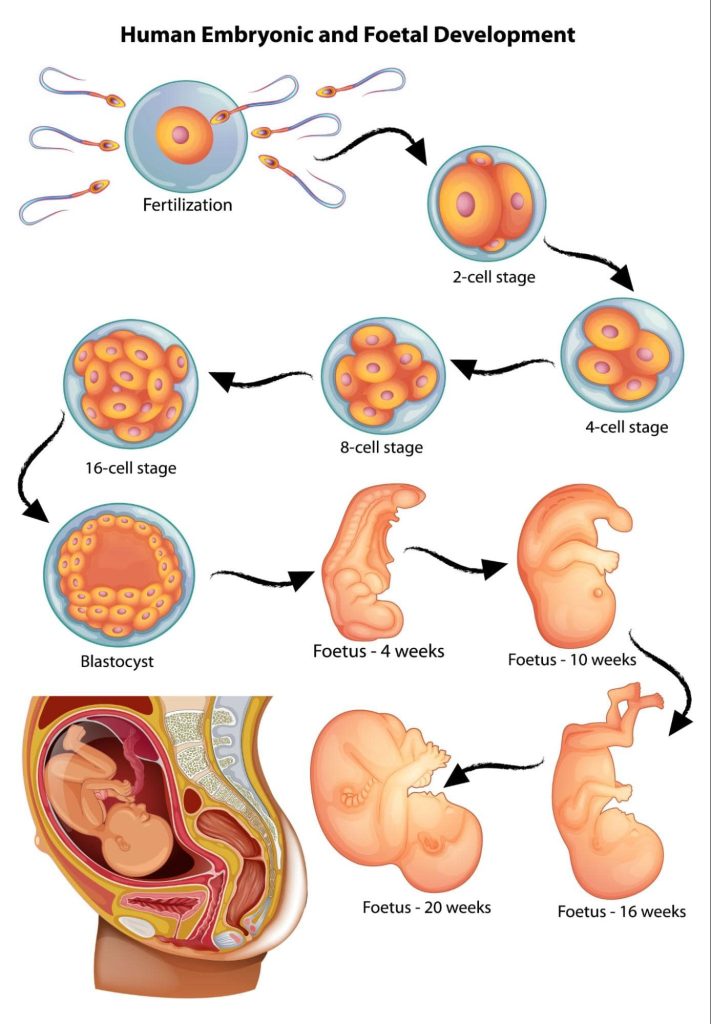
Why This Stage Matters
Not every fertilized egg reaches the blastocyst stage, and that’s perfectly okay. As the cells split, weaker embryos typically cease developing. The ones that become blastocysts are typically stronger and more likely to implant successfully. Because this stage closely reflects what occurs naturally in the body, transferring a blastocyst may boost the possibility of pregnancy in many IVF cycles.
Why Grow Embryos to the Blastocyst Stage?
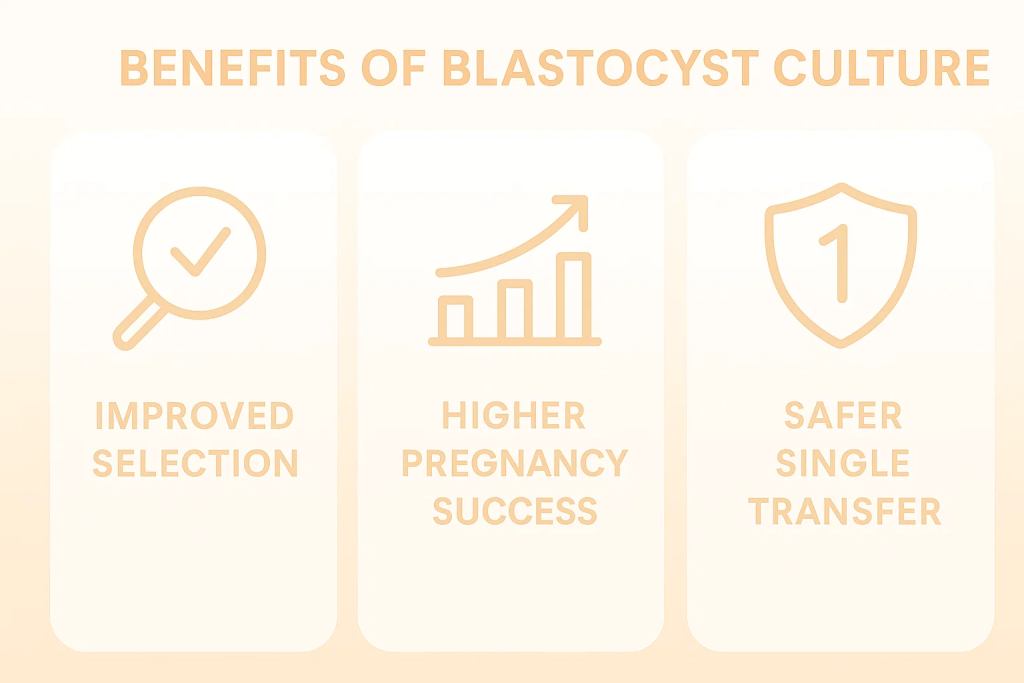
Improved Embryo Selection
Allowing embryos to grow to day five gives specialists a clearer view of which ones are developing normally. By this stage, only the healthiest embryos continue dividing and forming into blastocysts. This helps embryologists choose embryos with the best potential for implantation rather than relying on early signs seen on day two or three. In simple terms, the embryo has more time to “prove” its strength before being transferred.
Higher Chances of Pregnancy
Many studies have shown that transferring embryos at the blastocyst stage can increase pregnancy rates. Because these embryos have already shown strong growth, they are more likely to implant successfully once transferred into the uterus. Clinics like ours that use this approach often see fewer transfers needed to achieve a pregnancy, meaning patients may reach success faster and with fewer treatment cycles.
Safer Single Embryo Transfers
Another advantage of growing embryos to this stage is safety. Since blastocysts have a higher chance of success, doctors can confidently transfer just one embryo, lowering the risk of twins or triplets. This makes the process safer for both the patient and the potential pregnancy.
Blastocyst Grading and How Clinics Choose Which Ones to Transfer
Once embryos reach the blastocyst stage, embryologists evaluate them using a grading system that looks at three main parts: the inner cell mass, the outer layer, and the overall expansion of the embryo. The inner cell mass should be compact and healthy, as it develops into the baby. The outer layer, called the trophectoderm, is made up of cells that will form the placenta. The degree of expansion shows how ready the embryo is for implantation.
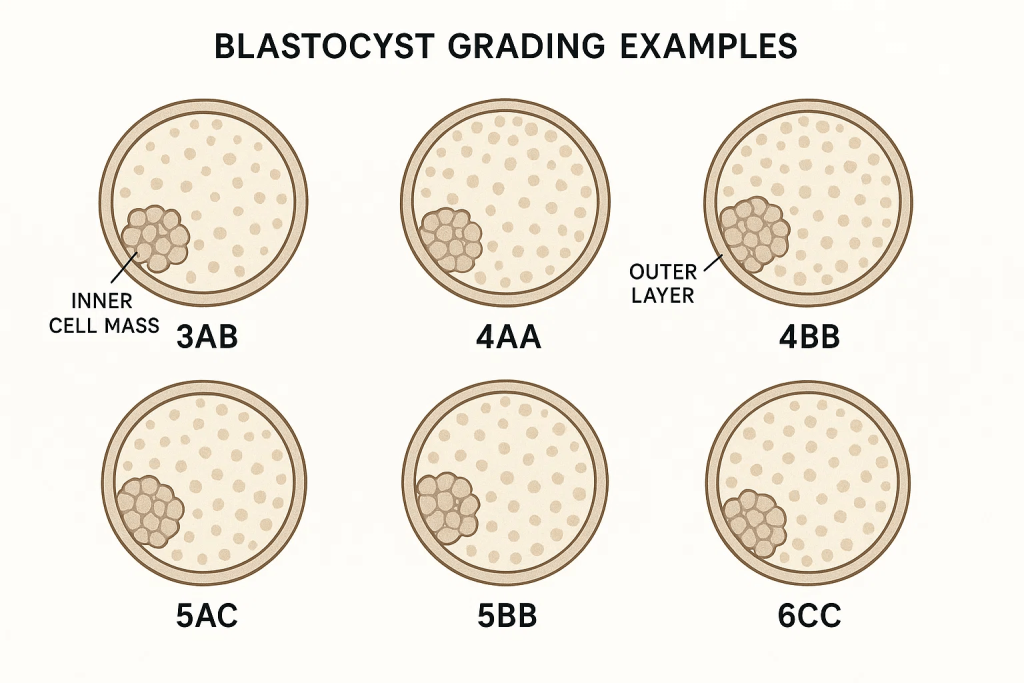
Grades are often shown as numbers and letters, such as “4AA” or “3AB.” The first number reflects how expanded the blastocyst is, and the letters describe the quality of the inner and outer cells. For example, a 4AA blastocyst generally shows strong growth and a good structure.
How Embryologists Use These Grades
Embryologists use this grading method to evaluate which embryos are most likely to implant successfully. The highest-quality blastocysts are normally transferred first, while others may be preserved for future rounds. In certain circumstances, clinics also carry out Preimplantation Genetic Testing (PGT) to screen for chromosomal health before transfer. This combination of grading and genetic testing helps select embryos with the highest probability of leading to a safe pregnancy.
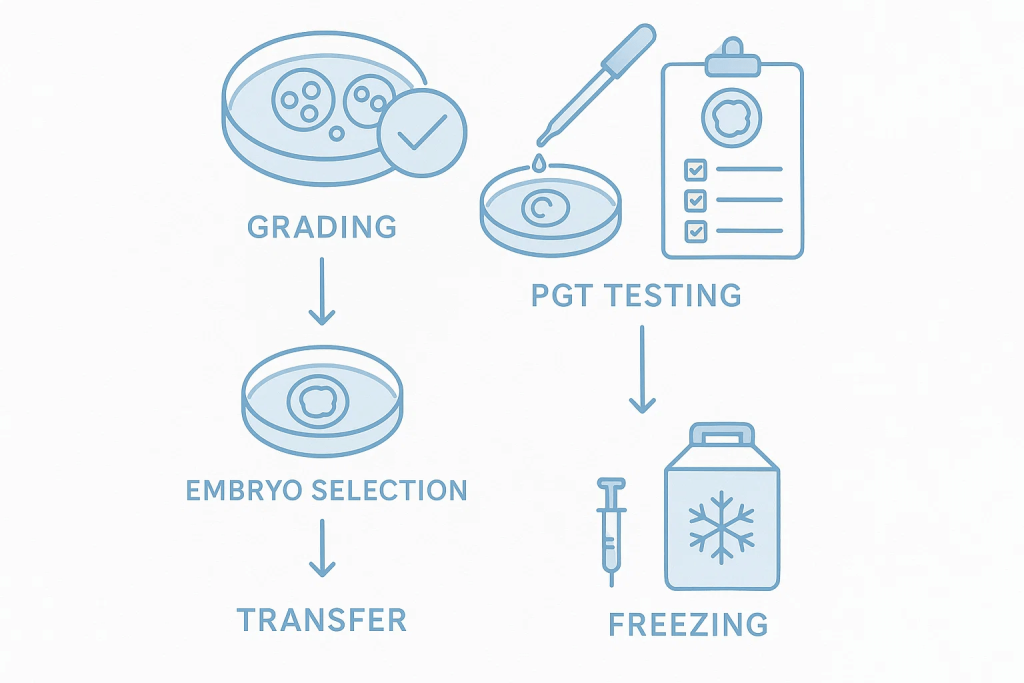
Our patients typically benefit from this comprehensive strategy, which combines improved laboratory procedures, meticulous embryo monitoring, and evidence-based selection to achieve better IVF results.
Blastocyst Transfer in IVF Treatment
When and How the Transfer Happens
Blastocyst transfer normally takes place on day five following fertilization, however occasionally it may occur on day six if the embryos develop somewhat slowly. Before transfer, the uterus is carefully treated with hormones to ensure the lining is thick and receptive. Using a thin, flexible catheter, the embryologist gently puts the chosen blastocyst into the uterus. The treatment is rapid, safe, and does not require anesthetic. Patients may normally resume regular daily activities shortly after.
Blastocyst vs. Early Embryo Transfer
Transferring embryos at the blastocyst stage offers various benefits. It better fits the natural time of implantation and enables clinicians to select embryos with superior development potential. For many patients, this technique boosts pregnancy success while lowering the need to transfer several embryos. However, early embryo transfers (on day two or three) might still be a suitable choice for people with fewer embryos or other unique conditions. The decision depends on each patient’s circumstances and is determined along with their reproductive doctor.
Role of ICSI and Laboratory Techniques
In many IVF cycles, Intracytoplasmic Sperm Injection (ICSI) is used to fertilize eggs more precisely. This method helps reduce fertilization errors and creates healthier embryos that can grow into strong blastocysts. Advanced labs like ours use high-quality culture systems and experienced embryologists to ensure that each embryo develops in the most stable environment possible, improving the likelihood of a successful transfer and pregnancy.
The Final Step Toward New Beginnings
Reaching the blastocyst stage is a promising milestone in the IVF journey. It reflects healthy development and gives doctors valuable insight into which embryos have the best chance to implant and grow. While not every embryo will reach this point, those that do often represent the strongest opportunities for success.
If you’re exploring IVF or want to understand more about blastocyst culture, our team at Millennium IVF can guide you through each step. We combine advanced techniques with personalized care to help you move closer to a healthy pregnancy.
Written by
Dr. Naruemit Wonglikitpanya, M.D.
Fertility specialist at Millennium IVF Clinic in Bangkok with over 15 years of experience, known for evidence-based IVF care and personalized treatment plans.
Share this article
Talk to our care team.
Free consultations with our specialists: clear, personalized advice for your IVF journey.
Book Consultation