How Lifestyle Choices Like Diet and Exercise Affect Fertility
When you’re trying to get pregnant, it’s natural to focus on fertility tests, cycles, and treatment options. But sometimes, the daily choices you make around food, activity, and overall health can also have a major impact. Both men and women can improve their chances of conceiving by adjusting their lifestyle.
This article will share our expertise and explore how diet and exercise affect fertility, what changes may help, and why taking care of your body is one of the most important steps you can take, whether you’re trying naturally or planning for IVF.
Why Lifestyle Impacts Fertility
Fertility Isn’t Just About Hormones
While fertility treatments often focus on hormones and reproductive organs, your overall health plays a big role too. The body needs to feel safe and balanced to support reproduction, and lifestyle habits like sleep, stress, smoking, and diet can all influence fertility.
For example, high stress levels may interfere with ovulation or sperm production, and poor sleep can disrupt the hormones that control your cycle or testosterone levels.
Men and Women Are Both Affected
Fertility health isn’t just a woman’s concern. Studies show that men who eat healthier diets and stay active often have higher sperm counts and better motility. For women, balanced hormones and regular ovulation are more likely when the body is well-nourished and supported by good habits.
Making small, healthy lifestyle changes as a couple can benefit both partners, and create a stronger foundation for conception and pregnancy.
The Role of Diet in Reproductive Health
What to Eat for Better Fertility
A balanced diet supports hormone health and egg and sperm quality. Focus on:
- Whole foods like fruits, vegetables, whole grains, lean proteins, and healthy fats
- Antioxidant-rich foods (berries, spinach, nuts) to reduce inflammation
- Nutrients like folate, iron, and omega-3 fatty acids that support reproductive function
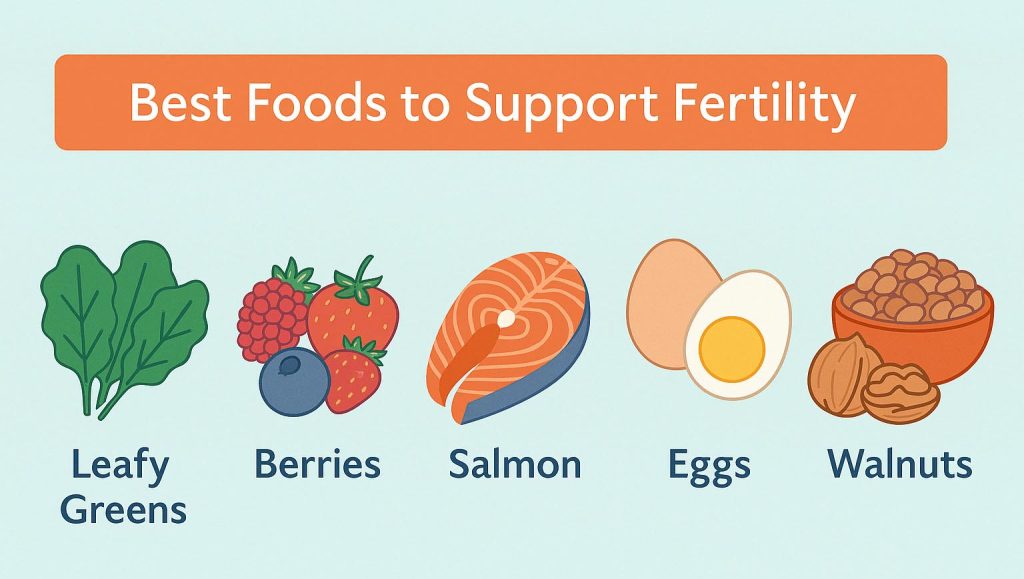
The Mediterranean diet, which includes many of these foods, has been linked to improved fertility outcomes in both men and women.
Foods to Limit or Avoid
Certain foods can negatively affect fertility if eaten too often. Try to limit:
- Processed and fried foods high in trans fats
- Sugary drinks and snacks
- Excessive caffeine and alcohol
These can disrupt blood sugar and hormone balance, especially in women with insulin resistance or Polycystic Ovarian Syndrome (PCOS) – a common condition where a woman’s hormones are out of balance.
How Diet Affects Hormones and Ovulation
What you eat influences insulin, estrogen, and other hormones involved in the menstrual cycle. Stable blood sugar levels from a low-glycemic, whole food diet can support regular ovulation and improve fertility naturally. A well-balanced diet also helps prepare the body for fertility treatment like IVF or IUI.
How Exercise Affects Fertility
The Right Balance Matters
Regular exercise can support healthy fertility, but it’s important not to overdo it. Light to moderate activity helps regulate hormones, reduce stress, and support a healthy weight. However, intense workouts, especially when combined with low calorie intake, can disrupt ovulation and reduce sperm quality.

Benefits for Both Men and Women
Staying active has fertility benefits for both partners:
- In women, it may help regulate periods and improve hormone balance
- In men, it can boost testosterone levels and improve sperm motility
- It also reduces stress, which can have a positive effect on fertility outcomes
What Types of Exercise to Consider
Gentle, consistent activities are often best while trying to conceive:
- Walking, swimming, yoga, and moderate strength training
- Limit high-intensity training or extreme endurance sports during this time
If you’re unsure about how much or what kind of exercise is right for you, speak with your fertility doctor or a physical therapist with experience in reproductive health.
How Weight Impacts Fertility
Body weight can influence fertility in both men and women. While you don’t need to be at a “perfect” weight to conceive, being significantly underweight or overweight may affect hormone levels and make it harder to get pregnant.
- In women, excess body fat can lead to irregular ovulation or conditions like PCOS. On the other hand, being underweight may stop ovulation altogether.
- In men, a high BMI has been linked to lower sperm count, reduced motility, and lower testosterone levels.
Even small changes in weight, such as 5 to 10 percent, can improve natural fertility or boost the success of treatments like IUI or IVF.
That said, BMI isn’t the only measure that matters. Body composition, lifestyle, and hormone levels also play a role. A personalized approach, guided by your fertility specialist, is often the most effective way to support reproductive health.
Diet and exercise are not a cure-all for infertility, but they do have a real impact on your reproductive health. Simple lifestyle changes, like eating more whole foods, staying active, managing weight, and reducing stress, can improve hormone balance, ovulation, and sperm quality.
Even small, steady improvements can make a difference, especially when paired with fertility care. Whether you’re just starting to try or preparing for treatments like IVF or ICSI, taking care of your body is an important part of the journey.
If you’re unsure where to start, speaking with one of our fertility specialists at Millennium IVF is a first step. With the right guidance and support, you and your partner can take positive steps toward growing your family.
Written by
Dr. Naruemit Wonglikitpanya, M.D.
Fertility specialist at Millennium IVF Clinic in Bangkok with over 15 years of experience, known for evidence-based IVF care and personalized treatment plans.
Share this article
Talk to our care team.
Free consultations with our specialists: clear, personalized advice for your IVF journey.
Book Consultation