Can You Start Fertility Testing in Your Home Country Before Traveling for IVF?
Dr. Naruemit WonglikitpanyaMarch 2026Updated August 2026
Key points
Much of the initial testing can be done at home, provided it is coordinated with the treating clinic.
Commonly hormone blood tests, a pelvic ultrasound and a semen analysis, though clinics differ on what they accept.
Send full reports rather than summaries, and keep digital copies of everything.
Expect a few confirmations after arrival, particularly tests tied to a point in the cycle. That is not a full restart.
Start early enough for results to be reviewed before you book travel, since they may change the plan.
M
Many patients ask us the same question before planning treatment abroad: do I need to wait until I arrive, or can I start fertility testing at home? It is a practical concern, especially when you are trying to save time and avoid unnecessary travel.
Much of the initial testing can be done in your home country, as long as it is coordinated properly. Some results can be used directly, while others may need to be confirmed once you arrive. In this guide, we explain which tests you can complete locally, what may need repeating, and how to prepare so your treatment can begin smoothly when you travel.
Can You Start Fertility Testing Before Traveling?
In most cases, yes. Starting testing in your home country is often the most practical way to begin. It allows us to review your situation early and plan your next steps before you travel.
The goal at this stage is not to complete everything, but to gather enough information to guide your treatment safely and efficiently.
Many patients begin with a few key tests locally. These are widely available and give a useful starting point:
Hormone blood tests, including AMH, which reflects ovarian reserve
A pelvic ultrasound to assess the ovaries and uterus
Semen analysis, if a partner is involved
Basic health screening where needed
These results help us understand how your body may respond to treatment. From there, we can advise on timing, expected duration, and whether IVF or ICSI is likely to be the most appropriate approach for your situation.
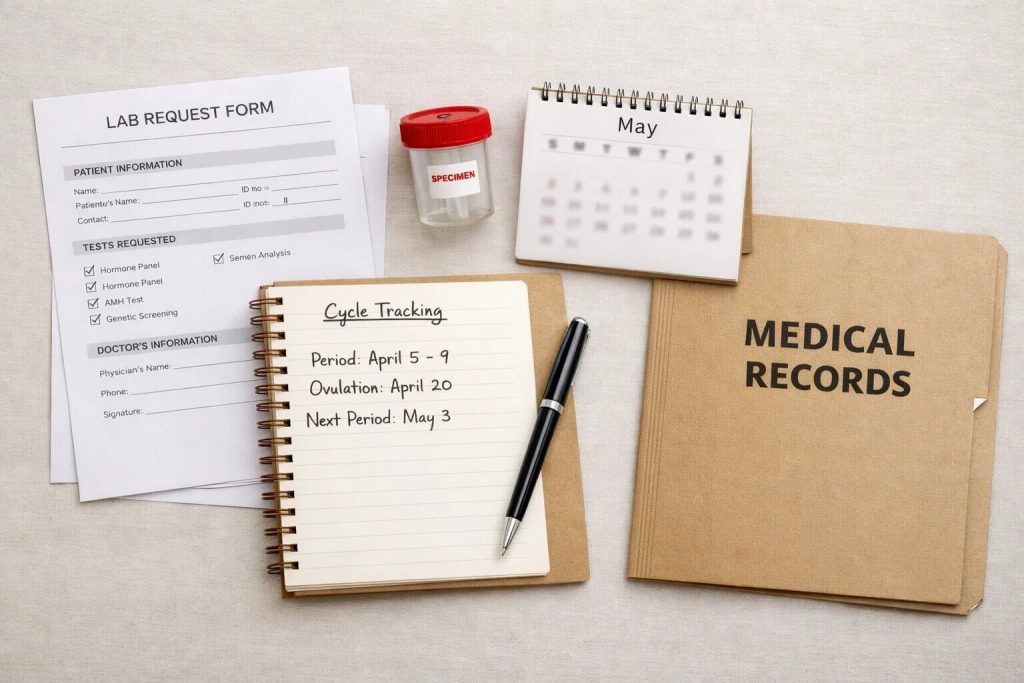
One detail that often gets overlooked is timing. Some hormone tests need to be done at a specific point in your menstrual cycle. If timing is off, the results may not be as useful. This is something we guide you through in advance, so you do not need to repeat tests unnecessarily.
Which Tests Are Usually Accepted and Which May Be Repeated
Once you have completed tests in your home country, the next step is understanding how they will be used. Some results can be relied on directly. Others may need to be confirmed after you arrive.
This is not because something is wrong. It is simply about making sure decisions are based on accurate and up-to-date information.
In general, certain tests tend to carry over well:
AMH levels, as they are relatively stable over time
Infectious disease screening, if done recently and clearly documented
Semen analysis, provided the report includes full details
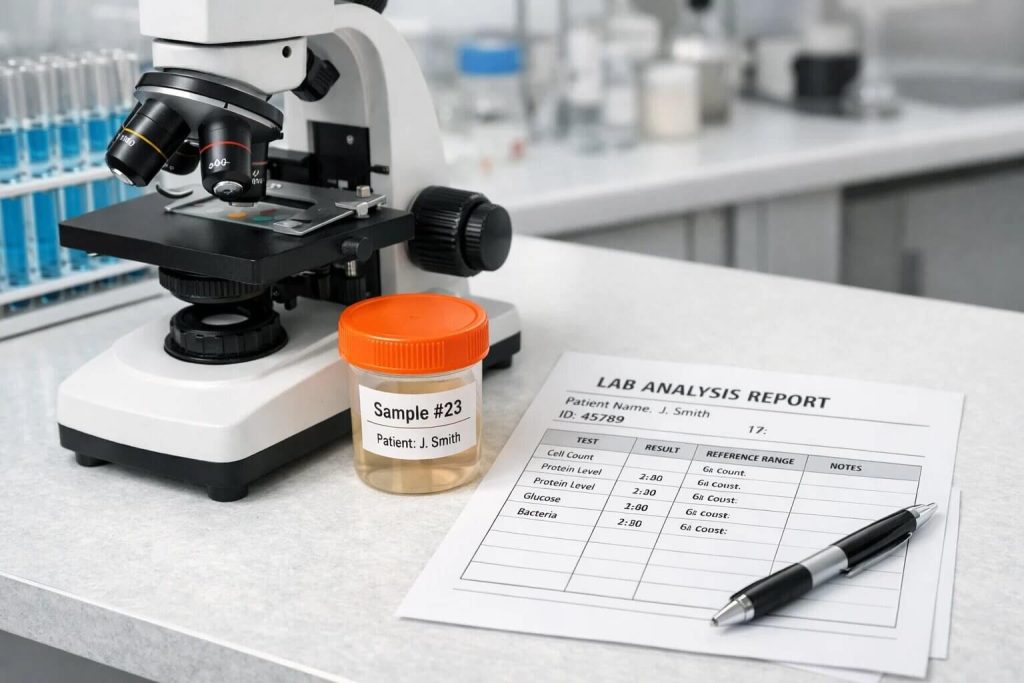
Semen analysis provides key information for treatment planning.
Other tests are more sensitive to timing or technique, so they are often repeated. Ultrasound scans are a common example. They give a real-time view of the ovaries and uterus, which can change from cycle to cycle.
Hormone tests may also need to be checked again if:
They were taken outside the recommended timing
Results are borderline or unclear
There has been a gap between testing and treatment
For international patients, you can complete much of the preparation at home, while still ensuring that final decisions are based on the most reliable and current information once you arrive.
How to Coordinate Your Test Results With the Clinic
Once your tests are completed, coordination becomes the key step. Clear communication at this stage can save time later and help avoid unnecessary repetition.
Start by sending your results in advance. Full reports are always more helpful than summaries or screenshots. We look at the details, including dates, reference ranges, and how the tests were performed.
It also helps to include a bit of context. Let us know when in your cycle the tests were taken and whether there were any changes in your health or medication at the time. Small details like this can affect how results are interpreted.
After reviewing your reports, we will guide you on what comes next. This may include:
Confirming which results are suitable for planning
Identifying anything that should be repeated after arrival
Outlining a treatment timeline based on your cycle
At this point, you will have a much clearer picture. You will know what has already been covered, what still needs to be done, and how your travel fits into the plan.
What Happens After You Arrive in Thailand
Even with good preparation, there are a few final checks once you arrive. These are usually quick, but they play an important role in making sure everything is aligned before treatment begins.
Your first visit focuses on confirmation. We repeat a baseline ultrasound to assess your ovaries and check your current cycle stage. In some cases, a blood test is also done to confirm hormone levels. These steps give us a real-time view of your condition.
From there, we review everything together. Your previous test results, your current findings, and your treatment plan are all considered as a whole. If anything needs adjusting, it is done at this stage.
Most patients find this part straightforward. The process is structured and does not take long. In many cases, treatment can begin shortly after these checks are completed.
Start Early, Travel With Clarity
Beginning your fertility testing in your home country can make the entire journey feel more manageable. Instead of arriving with uncertainty, you arrive with a plan. Most of the groundwork is already done, and the next steps become clearer and more structured.
When tests are completed at the right time and shared in advance, your treatment can move forward smoothly once you arrive. Small details, like timing and complete reports, make a real difference.
If you are planning treatment abroad, the best next step is to start with guided testing and early consultation. At Millennium IVF, we help international patients align testing, travel, and treatment so the process feels organized and predictable from the beginning.
What to Prepare Before You Travel for IVF
Complete key tests early, but follow proper timing guidelines
Send full reports, not summaries or partial results
Allow time for review before booking travel
Expect a few confirmations after arrival, not a full restart
Keep digital copies of all medical records
Ask questions early to avoid last-minute changes
Frequently asked questions
Which tests can I usually do at home?
Commonly hormone blood tests including AMH, FSH and LH, a pelvic ultrasound with an antral follicle count, a semen analysis, and infection screening. Ask us to confirm the list and how recent each result must be before arranging anything.
Will anything be repeated when I arrive?
Some confirmations are normal, particularly tests that have to be done at a specific point in the cycle. That is not a full restart.
What format should results be sent in?
Full reports rather than summaries, and check whether translation is needed. Keep digital copies of everything.
How far ahead should I start?
Early enough for the results to be reviewed before you book travel, since what they show may change the plan. Our article on travelling abroad for treatment covers the wider planning.
Written by
NW
Dr. Naruemit Wonglikitpanya, M.D.
Fertility specialist at Millennium IVF Clinic in Bangkok with over 15 years of experience, known for evidence-based IVF care and personalized treatment plans.